


-

Add: HeBei ShengShi HongBang Cellulose Technology CO.,LTD.
-

Email
13180486930@163.com -

CONTACT US
+86 13180486930



Kizuia Jasi Embracing Resilience and Strength In a world fraught with challenges, the concept of Kizuia Jasi emerges as a beacon of hope and resilience. This phrase, derived from theoretical notions in philosophical literature, embodies the essence of overcoming adversity and thriving despite life's uncertainties. Kizuia Jasi can be interpreted as a symbolic journey through pain and healing. It suggests that every scar we carry tells a story— a narrative of struggle, growth, and ultimately, transformation. Each experience of hardship shapes us, offering lessons that fortify our spirit and illuminate the path towards self-discovery. Kizuia Jasi Embracing Resilience and Strength Cultural narratives across the globe highlight the importance of resilience, and Kizuia Jasi aligns closely with these traditions. In many cultures, stories of heroes overcoming adversity serve as metaphors for human tenacity. From ancient mythologies to modern literature, the motif of the underdog triumphing against all odds inspires individuals to confront their fears and stand tall in the face of adversity. These narratives not only entertain but also instill a sense of possibility, reminding us that resilience is a universal human trait. kizuia jasi Moreover, Kizuia Jasi encourages introspection and self-awareness. Understanding our pain allows us to navigate the complexities of our emotions, transforming them into sources of strength. Journaling, therapy, and open dialogues about mental health can facilitate this understanding. By processing our experiences—whether they involve loss, failure, or personal setbacks—we create space for healing. This healing is not linear; rather, it comes in waves, ebbing and flowing as we traverse the landscape of our emotions. In embracing Kizuia Jasi, we also cultivate empathy towards others. Recognizing that everyone bears their own scars fosters compassion and connection. By sharing our stories of resilience, we create a community built on mutual understanding and support. In a society that often celebrates success without acknowledging the struggle behind it, Kizuia Jasi invites us to honor both the triumphs and the trials. As we navigate an increasingly complex world, the principles embodied in Kizuia Jasi remind us that resilience is empowered through community and shared experience. In moments of darkness, it is the bonds we forge with others that illuminate our path forward. We learn, we support, and we rise together. In conclusion, Kizuia Jasi serves as a powerful reminder that within each of us lies the capacity to weather storms and emerge stronger than before. It encourages us to embrace our scars, recognizing them as symbols of our journeys rather than marks of defeat. As we navigate the complexities of our lives, may we carry the spirit of Kizuia Jasi in our hearts— a testament to our resilience, our strength, and our unyielding capacity to rise above adversity. Through this embrace, we allow ourselves not only to survive but to flourish in the face of challenges, turning our pain into powerful narratives of hope and transformation.
- 40000tons

Production
- 20+years

Experience
- 5000+㎡

Acreage

-

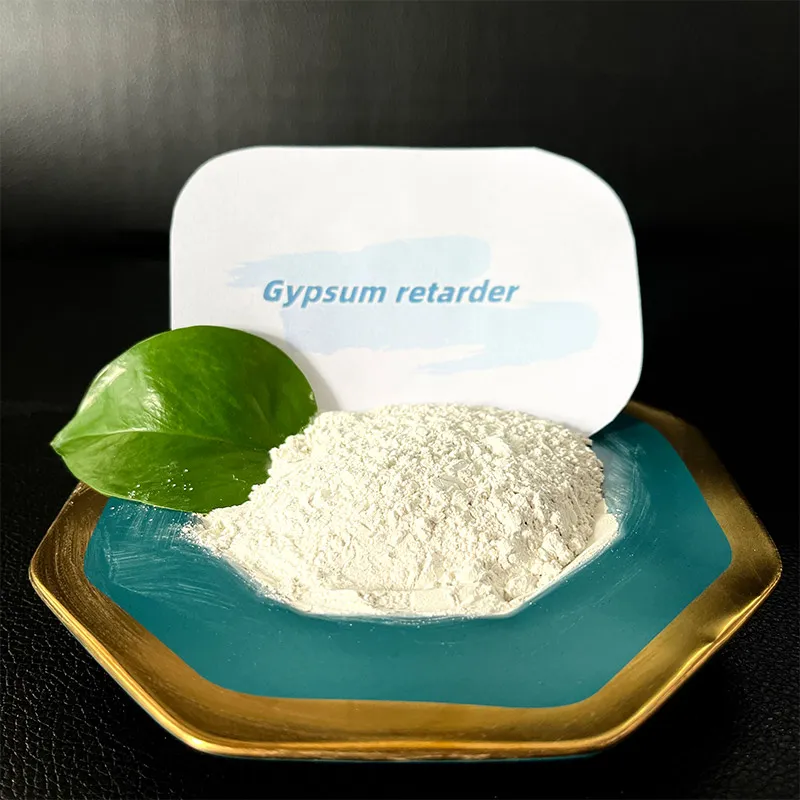
Gypsum retarder is an important construction additive, designed to extend the setting time of gypsum materials, thereby improving the operability of construction. This chemical is widely used in the construction industry, especially in projects requiring a long construction time, and plays a vital role. Due to the short setting time of traditional gypsum, it limits the large-scale and complex construction process, and after the addition of retarder, workers can more easily carry out fine construction and adjustment, ensuring the construction quality and efficiency. The main components of gypsum retarder can include a variety of organic and inorganic substances, such as sodium citrate, tartaric acid and so on. By reacting with dissolved components in gypsum, these substances delay the hydration reaction rate of gypsum, thus delaying the initial and final coagulation time. This delay does not affect the final strength of the plaster, ensuring the durability and stability of the finished product. In recent years, with the improvement of building technology and construction standards, the demand for gypsum retarder continues to grow. New environmentally friendly gypsum retardants are gradually favored by the market, and they use more green and sustainable formulations to reduce the negative impact on the environment. Manufacturers are focusing on the development of efficient and environmentally friendly retarders to meet the sustainable development needs of the modern construction industry. The application of gypsum retarder is very wide, including wall plastering, ceiling, decorative modeling and so on. It ensures the flexibility of construction operation without affecting the physical properties and aesthetics of the finished product. This makes the chemical one of the indispensable materials in modern construction. In general, gypsum retarder as a chemical additive to improve construction convenience and operability, promote the technical progress of the construction industry, while catering to the trend of sustainable development, the future market potential can not be underestimated.
-

Hydroxypropyl Methylcellulose, commonly referred to by its INCI name HPMC, is an ingredient widely used in various industries, including pharmaceuticals, food, and personal care products. This versatile compound combines expertise in formulation science with practical experience in product development, making it an authoritative choice for innovators seeking reliable performance and superior results. HPMC is prized for its multifunctionality, exhibiting properties that enhance viscosity, stability, and texture in numerous applications. In the pharmaceutical industry, for instance , HPMC is a favorite among formulators due to its ability to control drug release. The polymer's film-forming capabilities provide an effective medium for encapsulating active pharmaceutical ingredients (APIs), ensuring that medication is delivered at a consistent rate. This controlled delivery not only enhances patient compliance but also optimizes therapeutic outcomes. The personal care sector also benefits from the expertise embedded in HPMC. Its thickening properties are leveraged in a variety of skincare and hair care products, where it acts as a rheology modifier. By adjusting the viscosity of formulations, HPMC helps stabilize emulsions, preventing the separation of oil and water phases, which enhances product shelf life and performance. Moreover, its non-ionic nature ensures compatibility with a wide range of ingredients, allowing for creativity and flexibility in developing innovative products. From a trustworthiness perspective, HPMC's safety profile stands out. Extensively studied and documented, it is recognized as non-toxic and hypoallergenic, aligning with consumer demands for safe and gentle ingredients. This translates into reassurance for both brands and consumers, knowing that the products they use are not only effective but also safe for regular use. Regulatory bodies worldwide, including the FDA and EFSA, have evaluated HPMC, endorsing its safety and efficacy across various applications. hpmc inci name Additionally, HPMC's role in the food industry underscores its versatility and authoritative presence. As a food additive, it acts as an emulsifier, thickener, and stabilizer, contributing to the texture and quality of a wide array of products from bakery to dairy. This multifunctional capability reduces the need for multiple additives, streamlining formulation processes and promoting cleaner label options, which is increasingly important for health-conscious consumers. Drawing from extensive scientific research and practical manufacturing experience, HPMC manufacturers have honed processes to produce high-quality, consistent material. This reliability in supply and consistency in performance are crucial factors in sectors where precision and quality are paramount. Furthermore, ongoing innovations aim to enhance the sustainability of HPMC production, focusing on environmentally friendly processes and reducing carbon footprints, aligning with global sustainability goals. For any business considering the inclusion of HPMC in their products, partnering with a reputable supplier is imperative. Expertise in formulation, combined with comprehensive quality control measures, ensures that the HPMC sourced meets all necessary standards and specifications. Utilizing HPMC not only enhances product performance but also positions brands as leaders in quality and innovation, leveraging the trust consumers place in well-formulated products. In conclusion, Hydroxypropyl Methylcellulose stands as a testament to the confluence of experience, expertise, authority, and trustworthiness. Its widespread application and proven benefits across multiple industries make it an invaluable ingredient for formulators and product developers aiming to meet consumer demands for effective, safe, and sustainable products. By leveraging the unique properties of HPMC, brands can achieve superior results, ensuring their offerings remain competitive in an ever-evolving marketplace.
advantages
-

200000 Viscosities
Excellent product
We can produce pure products up to 200,000 viscosities
-

40000 tons
High yield
We don’t stop production all year round, and the annual output can reach 40,000 tons
-

24 hours
Quality service
We provide 24-hours online reception service, welcome to consult at any time
———— Inquiry Form
Schedule A services
-
 celulosa_hpmc
Oct . 25, 2025
Methocel F4M, a popular brand of hydroxypropyl methylcellulose (HPMC), stands out as an essential in -
 epdm_rubber_powder
Oct . 25, 2025
Exploring the Intricacies of Hydroxyethyl Starch (HES) A Critical Product Insight Hydroxyethyl starc -
 cryogenic_rubber_powder
Oct . 25, 2025
When it comes to tile installation in high-moisture areas such as bathrooms, kitchens, and outdoor e


